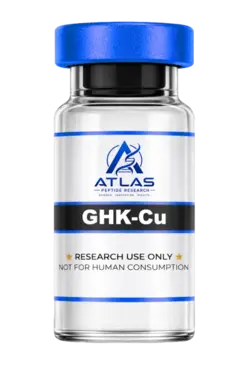
GHK-Cu
Copper Tripeptide-1 (Glycyl-L-Histidyl-L-Lysine Copper Complex)
At a Glance
Molecular Properties
Overview
Compound Description
GHK-Cu is a naturally occurring copper complex of the tripeptide glycyl-L-histidyl-L-lysine, first identified in human plasma by Loren Pickart in 1973. Research demonstrated that this factor, present at approximately 200 ng/mL in young plasma and declining with age, could modulate liver tissue function in experimental models. The copper-bound form has been investigated for its roles in wound healing, collagen synthesis, glycosaminoglycan production, and gene expression modulation across more than 50 years of published research.
Mechanism of Action
Research-Identified Pathways
GHK-Cu functions as a copper delivery vehicle and signaling molecule. The tripeptide binds copper(II) ions with high affinity and facilitates their transport into cells, where copper serves as a cofactor for enzymes including lysyl oxidase (essential for collagen and elastin cross-linking) and superoxide dismutase (involved in antioxidant defense).
Gene expression studies using the Broad Institute Connectivity Map have revealed that GHK modulates the expression of approximately 4,699 genes: roughly 6% of the human genome. Genes associated with tissue remodeling, including those encoding collagen, elastin, and proteoglycans, show upregulation, while genes involved in tissue destruction, chronic inflammation, and fibrotic signaling are downregulated. Research has also demonstrated stimulation of decorin production, a proteoglycan involved in TGF-beta regulation that is associated with organized collagen fibril assembly.
Key Research Findings
Published Study Highlights
- Gene expression analysis reveals modulation of approximately 4,699 human genes, representing roughly 6% of the genome
- Research demonstrates stimulation of collagen types I and III, elastin, and glycosaminoglycan synthesis in fibroblast cultures
- Studies indicate upregulation of tissue remodeling genes with simultaneous downregulation of inflammatory and fibrotic markers
- Investigated for antioxidant gene expression modulation, including effects on superoxide dismutase and glutathione pathways
- Preclinical wound healing studies show enhanced decorin production associated with organized collagen deposition
Areas of Research Interest
Why Researchers Are Investigating This Compound
This compound has attracted significant research attention in the following areas. These represent active fields of scientific inquiry, not validated therapeutic claims. No medical benefits are stated or implied.
- Anti-aging and skin rejuvenation: one of the most researched peptides in cosmetic science, with studies on collagen and elastin synthesis drawing widespread attention
- Wound healing and scar remodeling: investigated for its ability to promote organized collagen deposition rather than fibrotic scar tissue
- Hair growth and follicle health: research on its gene expression modulation has generated interest in hair biology applications
- Antioxidant defense: studies on its effects on superoxide dismutase and glutathione gene expression have attracted interest from longevity researchers
Published Research
Peer-Reviewed References
- Pickart L, Margolina A "Regenerative and Protective Actions of the GHK-Cu Peptide in the Light of the New Gene Data." International Journal of Molecular Sciences (2018). doi:10.3390/ijms19071987
- Pickart L, Vasquez-Soltero JM, Margolina A "GHK-Cu may Prevent Oxidative Stress in Skin by Regulating Copper and Modifying Expression of Numerous Antioxidant Genes." Cosmetics (2015). doi:10.3390/cosmetics2030236
- Maquart FX, Pickart L, Laurent M, Gillery P, Monboisse JC, Borel JP "Expression of Glycosaminoglycans and Small Proteoglycans in Wounds: Modulation by the Tripeptide-Copper Complex Glycyl-L-Histidyl-L-Lysine-Cu2+." Journal of Investigative Dermatology (1988). doi:10.1111/1523-1747.ep12360024
- Pickart L, Vasquez-Soltero JM, Margolina A "GHK peptide as a natural modulator of multiple cellular pathways in skin regeneration." BioMed Research International (2015). doi:10.1155/2015/648108
Research Use Only
The information presented on this page is compiled from peer-reviewed scientific literature and is provided solely for educational and research purposes. This compound is intended exclusively for laboratory and scientific research use. It is not a drug, pharmaceutical, or dietary supplement. It is not intended to diagnose, treat, cure, or prevent any disease or medical condition. No claims of therapeutic efficacy are made or implied.
Researchers are advised to consult the original published studies referenced above for complete methodological details, study limitations, and the authors' own conclusions. Atlas Peptide Research does not endorse any specific research application and provides this information as a reference resource only.
Interested in GHK-Cu?
View this compound in our shop to see available sizes, certificates of analysis, and current pricing.
View in Shop