Metabolic
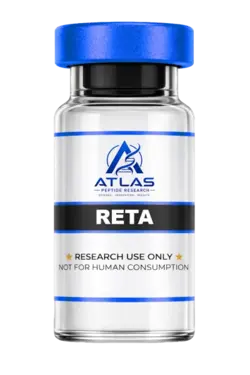
RETA
RETA is a synthetic multi-receptor agonist peptide investigated in laboratory research for its interactions with incretin and glucagon receptor pathways. This compound is supplied at ≥99% purity, verified by LC-MS and HPLC analysis, and is available in 10mg and 30mg quantities. RETA is intended strictly for laboratory research use only and is not for human or animal consumption.
Mechanism of Action
RETA's triple-receptor engagement creates complementary metabolic effects through three distinct but overlapping signaling pathways. GIP receptor agonism potentiates glucose-dependent insulin secretion and influences adipose tissue lipid handling. Activation of the second incretin receptor suppresses glucagon secretion, slows gastric emptying, and modulates appetite-regulating circuits in the hypothalamus.
The glucagon receptor component, unique to the triple-agonist approach, stimulates hepatic energy expenditure through glycogenolysis and gluconeogenesis upregulation, fatty acid oxidation, and thermogenesis. This third receptor engagement is hypothesized to drive the substantially greater weight reduction observed in clinical trials compared to dual-agonist approaches. Structural studies using cryo-EM have revealed the binding conformations at all three receptors, providing molecular-level insight into the peptide's poly-pharmacology.
Research Applications
- → Phase 2 obesity trial reported that more than 90% of participants at the highest evaluated amount achieved 10% or greater weight reduction from baseline
- → Systematic review and meta-analysis across 640 participants showed significant reductions in body weight, BMI, and waist circumference versus placebo
- → Phase 2a liver study demonstrated liver fat reductions of up to 82.4% from baseline, with 86% of participants achieving normal liver fat levels
- → Cryo-EM structural studies have revealed the molecular binding conformations at all three target receptors
- → TRIUMPH registrational program is investigating the compound in obesity and related comorbidities including obstructive sleep apnea
Analytical Validation
RETA is verified via LC-MS and HPLC analysis. Each lot is tested for identity, purity (≥99% target), and endotoxin levels. Full certificate of analysis is available upon request.